Soft Washing vs Pressure Washing: What's the Difference?
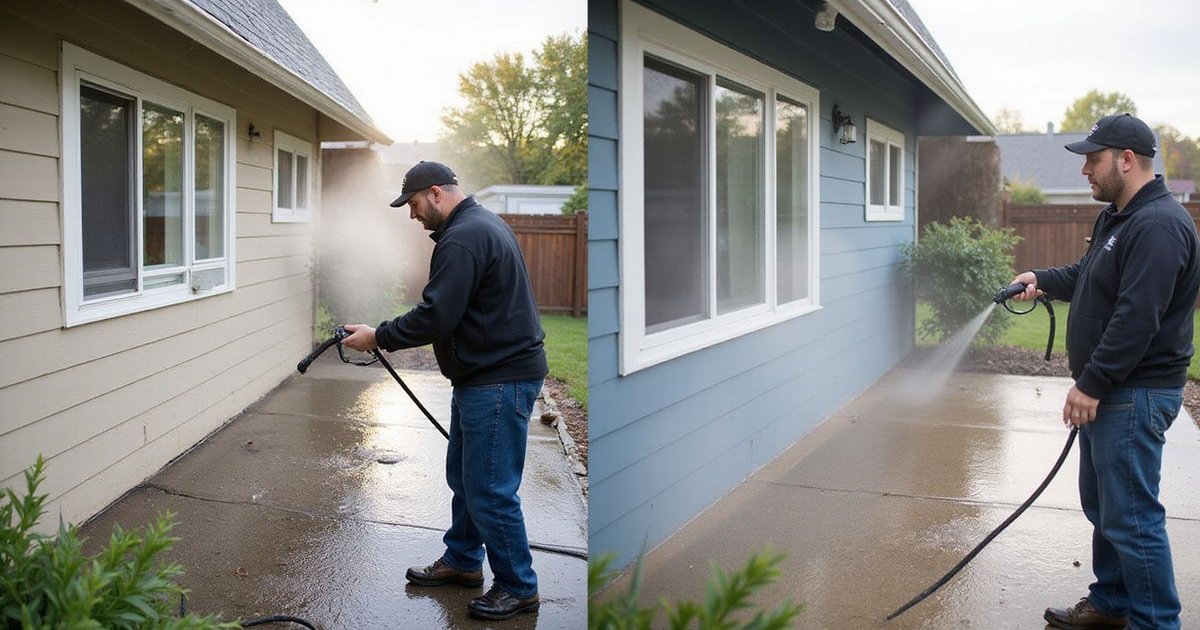
If you have started researching how to clean your home’s exterior, you have likely encountered two main terms: soft washing and pressure washing.
We find that most homeowners use these terms interchangeably.
The reality is that they are completely different cleaning protocols.
Using the wrong method does not just lead to a poor clean.
It can cause thousands of dollars in property damage.
We want to help you understand the difference so you can protect your largest investment.
What Is Pressure Washing?
Pressure washing, often referred to as power washing, relies on high-velocity water to physically blast away contamination.
The equipment typically generates water pressure between 1,500 and 4,000 PSI (pounds per square inch).
To put that in perspective, a standard garden hose usually outputs about 40 to 60 PSI.
Commercial pressure washing relies on mechanical force rather than chemistry to do the work.
When to Use Pressure Washing
Hard, porous surfaces are generally the only candidates for this level of intensity.
- Concrete driveways and sidewalks: These surfaces require 3,000+ PSI to remove embedded oil and dirt.
- Exposed aggregate: The textured surface traps grime that low pressure cannot reach.
- Brick and stone patios: Hard masonry can withstand the force if the mortar is in good condition.
- Retaining walls: Unpainted concrete or block walls benefit from a high-pressure rinse.
The “Red Tip” Warning
We always advise homeowners to be cautious with DIY pressure washers.
Most rentals come with a zero-degree nozzle, usually color-coded red.
This tip concentrates water into a laser-like stream that can cut through skin, boots, and wood instantly.
Professional teams rarely use this tip on residential surfaces due to the extreme risk of etching.
What Is Soft Washing?
Soft washing is a chemical-based cleaning method that uses low pressure (typically under 500 PSI) and high-volume water flow.
The process relies on specialized biodegradable solutions to break down organic matter.
It is more like giving your house a pest control treatment than a power wash.
The Science Behind the Clean
Our process utilizes a specific blend of sodium hypochlorite, water, and a surfactant (soap) that allows the solution to cling to vertical surfaces.
- Sodium Hypochlorite: Kills mold, mildew, moss, and algae at the molecular level.
- Surfactants: Reduce surface tension, allowing the cleaner to penetrate deep into the pores of siding and shingles.
- Dwell Time: The solution sits on the surface for 10-15 minutes to dissolve grime before being gently rinsed away.
Best Uses for Soft Washing
- Vinyl and aluminum siding: Prevents the “oxidation removal” streaks that high pressure causes. Learn more about our house washing service.
- Asphalt shingle roofs: The Asphalt Roofing Manufacturers Association (ARMA) specifically recommends low-pressure cleaning to preserve warranty coverage. See our roof cleaning process.
- Stucco and EIFS: These soft materials can be gouged easily by high pressure.
- Wood fences and decks: Soft washing cleans the wood without raising the grain or causing splinters.
- Screens and windows: Prevents seal failure and screen tearing.
Why This Distinction Matters for Your Wallet
Choosing the wrong method is not just a cleaning error.
It is often a financial liability.
We have seen unnecessary repair bills stem from improper equipment use.
The High Cost of High Pressure
- Siding Replacement: High pressure can force water behind vinyl panels, leading to trapped moisture and mold. Replacing siding on an average NC home can cost between $6,000 and $16,000 depending on materials.
- Window Seal Failure: Blasting windows breaks the thermal seal between panes. This results in permanent fogging that requires total window replacement.
- Roof Life Reduction: Pressure washing strips the protective granules off asphalt shingles. This accelerates aging and can void your manufacturer’s warranty immediately.
- Concrete Etching: Holding a pressure wand too close to a driveway creates permanent “tiger stripes” in the concrete that cannot be cleaned away.
The Soft Washing Advantage
- Root-Level Eradication: The chemical solution kills the root systems of algae and fungus.
- Longer Intervals: Because the organism is dead, it takes roughly four to six times longer to grow back compared to water-only cleaning.
- Conservation: Soft washing systems typically use about one-third of the water required for pressure washing.
The North Carolina Factor
Johnston County and the wider Triangle area present a unique challenge for exterior maintenance.
Our local climate is classified as humid subtropical.
Average humidity levels in our region frequently hover between 70% and 90% during the summer months.
This moisture creates a perfect incubator for organic growth.
Local Offenders
- Gloeocapsa Magma: This is the bacteria responsible for the ugly black streaks on North Carolina roofs. It feeds on the limestone filler in your shingles.
- Pine Pollen: During our intense spring pollen season, the yellow dust coats everything and provides a food source for mold.
- Green Algae: Common on the north-facing sides of Raleigh-area homes where the sun rarely dries the siding.
Blasting these organisms with water is temporary.
It is like mowing a weed instead of pulling it.
Soft washing acts as a sanitizer, removing the growth and sterilizing the surface so your home stays cleaner for longer.
Quick Reference: The Right Tool for the Job
Here is a breakdown of how we approach different surfaces on a typical Johnston County property.
| Surface | Method | Risk Factor |
|---|---|---|
| Concrete Driveway | Pressure Wash | Low (Use surface cleaner) |
| Vinyl/Hardie Siding | Soft Wash | High (Trapped water risk) |
| Asphalt Roof | Soft Wash ONLY | Severe (Granule loss) |
| Wood Deck | Soft Wash | Moderate (Splintering) |
| Brick Walkway | Pressure Wash | Low |
| Screens/Enclosures | Soft Wash | High (Tearing) |
Our Hybrid Approach
At Johnston Pressure Washing, we rarely use just one method on a property.
We utilize a hybrid cleaning protocol.
Our technicians assess each surface individually to determine the safest approach.
What a Typical Visit Looks Like
- Roof and House: We apply a soft wash treatment to kill algae and bacteria without risking impact damage.
- Gutters: We flush interiors and soft wash the exteriors to remove “tiger striping” stains.
- Flatwork: We switch to commercial-grade surface cleaners (pressure washing) for the driveway, sidewalks, and patios.
- Final Rinse: All plants and landscaping are pre-soaked and post-rinsed with fresh water to ensure their safety.
This combination ensures you get the deep clean of pressure washing where it is needed, and the safety of soft washing where it counts.
Ready to Restore Your Curb Appeal?
Your home is likely your biggest asset.
It deserves a cleaning method that protects its value.
If you are located in Johnston County or the surrounding communities, contact us for a free estimate.
We will walk the property with you, explain our specific recommendations, and provide a clear plan to get your home looking new again.
Do not gamble with high pressure on delicate surfaces. Let’s give your home the professional care it needs.